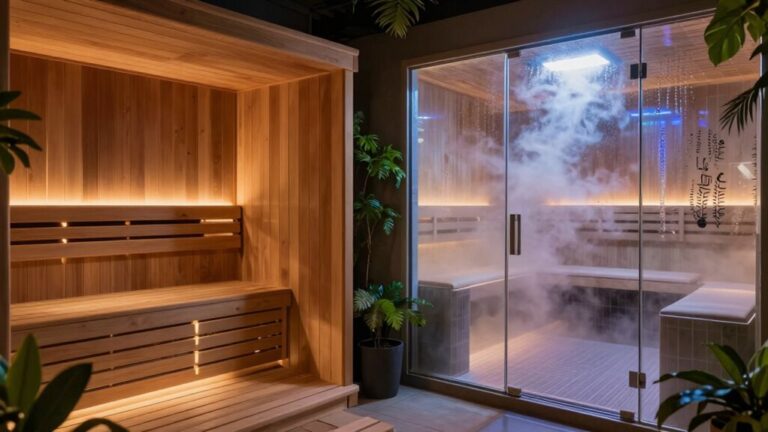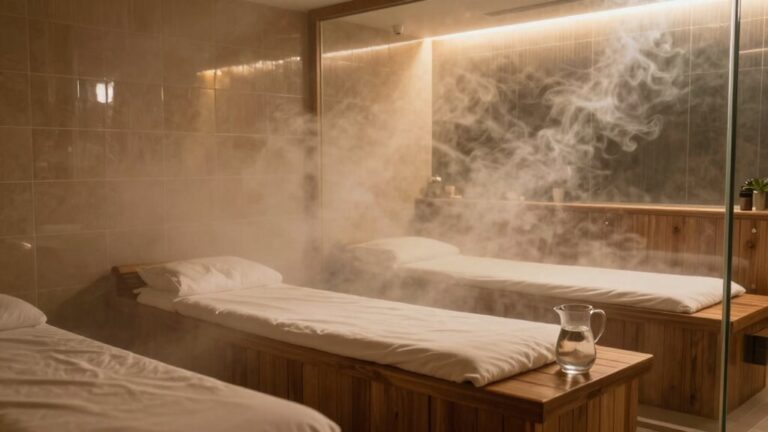
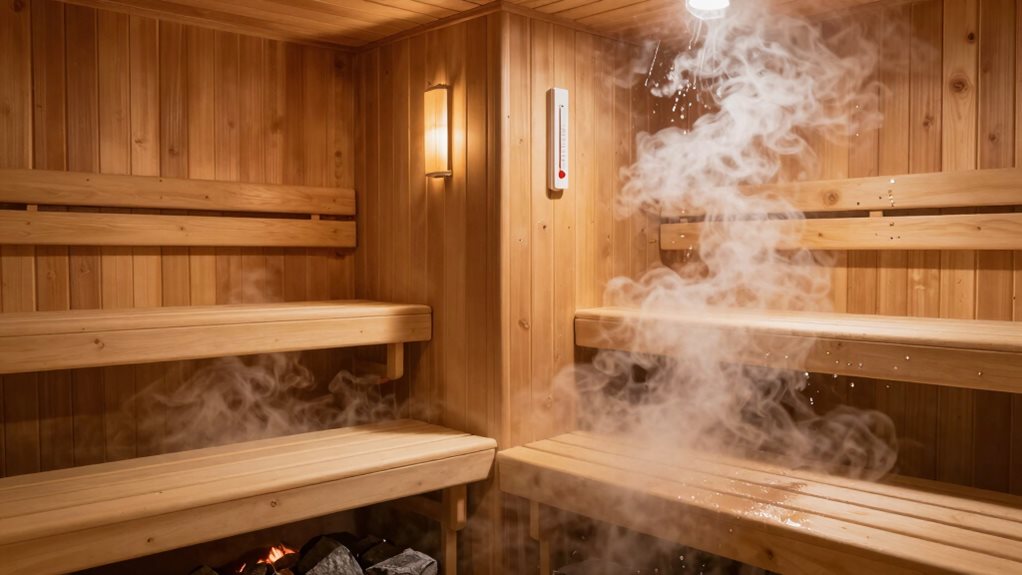

Neither dry nor wet saunas are inherently “better” – they simply offer different experiences. Dry saunas run hotter (160-200°F) with low humidity, promoting quick sweating and detoxification. Wet saunas operate cooler (100-120°F) with high humidity, benefiting respiratory health and skin hydration. Your choice depends on personal comfort, health goals, and heat tolerance. If you have respiratory issues, you might prefer wet saunas, while those seeking intense heat may favor dry options. The ideal sauna experience awaits in the details.
Understanding the Temperature & Humidity Differences
When stepping into the world of saunas, one of the first choices you’ll face is between dry and wet varieties, which differ dramatically in their temperature and humidity levels.
Dry saunas operate at much higher temperatures, typically between 160°F and 200°F, with very low humidity of 5-30%. This environment allows your sweat to evaporate quickly, cooling your body while promoting detoxification. They often utilize heating elements like wood, gas, or electric stoves to generate this intense dry heat. The wooden walls in dry saunas, typically made from pine, cedar, or spruce, serve an important function by absorbing moisture and maintaining the low humidity environment.
Wet saunas (steam rooms), by contrast, run at lower temperatures of 100°F to 120°F but maintain nearly 100% humidity. You’ll notice your sweat doesn’t evaporate here; instead, it collects on your skin, creating that intense steamy sensation.
Though they feel quite different, both environments create similar physiological effects after about 20 minutes. Your dry sauna experience might feel more bearable despite higher temperatures, while the wet sauna’s humidity makes even lower temperatures feel surprisingly intense.
Comparing Cardiovascular Effects & Health Benefits
Your heart responds differently to dry and wet saunas, with steam environments typically pushing your heart rate higher, often reaching 100-150 beats per minute.
While both sauna types create cardiovascular stress during sessions, research shows this temporary strain may actually strengthen your heart over time, with regular sauna users experiencing lower rates of heart disease and better blood pressure.
The cardiovascular benefits of frequent sauna bathing mirror some effects of moderate exercise, suggesting that your relaxing heat sessions might be giving your heart a valuable workout. Dry saunas, with their higher temperatures of up to 200°F, create significant cardiovascular demand as your body works to cool itself down.
Heat therapy has shown promising results as an alternative therapy for individuals with peripheral arterial disease who have difficulty engaging in traditional exercise regimens.
Heart Rate Response Differences
During both dry and wet sauna sessions, your heart rate increases considerably, though the pattern and intensity differ between these two popular heat experiences.
In dry saunas, with their higher temperatures (80–90°C), you’ll typically experience a more dramatic heart rate rise, sometimes reaching levels similar to moderate exercise—up to 60–100 beats per minute above your resting rate. Research shows this cardiac load during sauna bathing corresponds to moderate physical load of 60-100 watts on an exercise test.
Wet saunas, while set at lower temperatures, can trigger equally notable heart rate increases due to their high humidity, which intensifies your thermal sensation and sweat response. The increased cardiovascular activity in wet saunas can be beneficial for heart health, though it’s generally less intense than dry sauna effects.
The humidity in wet saunas makes it harder for your body to cool through evaporation, potentially sustaining elevated heart rates despite the lower ambient temperature.
Your heart typically returns to normal within 20–30 minutes after leaving either sauna type.
Long-term Cardiovascular Protection
Both dry and wet saunas offer impressive long-term cardiovascular protection, though they achieve these benefits through slightly different physiological pathways.
Regular use of either type is associated with reduced risks of sudden cardiac death, coronary heart disease, and all-cause mortality.
Dry saunas, with their intense heat and low humidity, create conditioning effects similar to moderate exercise, improving your blood pressure and improving left ventricular function over time. The high temperatures (160-200°F) in dry saunas produce cardiovascular conditioning comparable to light exercise sessions.
You’ll experience a 20 mmHg rise in systolic pressure during sessions, with notable long-term benefits.
Wet saunas, while imposing a higher physiological strain on your body, deliver similar protective effects with a slightly lower systolic increase (17.7 mmHg) but greater diastolic reduction (20 mmHg). The frequency of sessions impacts the magnitude of health benefits you’ll receive over time.
The higher humidity creates more intensive heat sensation, potentially maximizing circulation benefits.
Respiratory & Skin Impacts Between Sauna Types
Your sauna choice greatly affects how your respiratory system and skin respond to the heat experience.
When you sit in a wet sauna, the steam hydrates your mucous membranes and skin, leaving you with dewy, moisturized skin and potentially easier breathing if you have congestion.
In contrast, a dry sauna‘s intense heat might help loosen mucus and offer deeper detoxification through sweat, but it can also leave your respiratory passages and skin markedly drier than its steamy counterpart. Individuals with mild asthma or allergies may find the bronchodilation effect of dry saunas particularly beneficial for their breathing. For optimal lung health benefits, maintaining a consistent schedule of 2-4 sauna sessions weekly is recommended.
Mucous Membrane Response
Respiratory passages respond dramatically to different sauna environments, with steam and dry heat affecting your breathing in noticeably different ways.
Steam saunas increase moisture in your nasal passages, making mucus thinner and easier to clear. This helps open sinus pathways and boosts ventilation, like clearing a clogged drain.
Dry saunas, while relaxing, can actually dry out your nasal tissues, potentially increasing irritation for sensitive individuals.
If you’re fighting a cold, the warm, humid air in steam rooms may temporarily relieve congestion by expanding blood vessels in your nasal tissues.
For people with productive coughs, steam environments often help loosen sticky secretions.
Adding eucalyptus or menthol to steam can improve these decongestant effects, giving you that “I can breathe again” sensation that’s particularly satisfying during respiratory discomfort.
Skin Hydration Effects
Moving from how saunas affect your breathing, the skin tells an equally revealing story about the difference between wet and dry heat environments.
Wet saunas offer superior hydration benefits, as the steam opens your pores and allows your skin to absorb moisture directly. You’ll notice a softer, more radiant complexion after sessions, with the humid environment supporting your skin’s natural barrier.
Dry saunas, while excellent for circulation, can lead to moisture loss without proper care. The low humidity causes sweat to evaporate quickly, potentially leaving your skin dehydrated and irritated if you don’t moisturize afterward.
For ideal skin health, you might consider alternating between both types. Wet saunas provide gentle hydration, while dry sessions offer detoxification benefits.
Either way, don’t forget to hydrate and moisturize post-sauna to maximize benefits.
Respiratory Relief Comparison
When it comes to respiratory relief, the difference between wet and dry saunas couldn’t be more striking.
Wet saunas deliver warm, moist air that directly soothes your respiratory system, opening airways and hydrating your respiratory tract. If you’re dealing with congestion, allergies, or asthma, the steam helps loosen mucus and makes it easier to clear your airways.
Dry saunas, while beneficial for circulation, don’t provide the same direct respiratory benefits. The low humidity (10-20%) means you won’t get that decongestant effect.
However, if you have sensitive lungs that feel overwhelmed by moisture, you might find the lighter air of a dry sauna more comfortable.
Studies show wet saunas create greater physiological responses, raising your heart rate more (72 beats/min vs. 59.4 in dry saunas).
Safety Considerations for Different Sauna Experiences
Although both dry and wet saunas offer therapeutic benefits, understanding their safety profiles can help you avoid potential risks during your sessions.
Wet saunas can cause larger increases in core temperature and heart rate, while dry saunas initially spike blood pressure more rapidly in the first 10 minutes.
You’ll want to limit sessions to 5-15 minutes, especially if you’re new to sauna bathing.
Never drink alcohol before or during sauna use, as this dramatically increases dehydration risk. Stay hydrated before and after your session to prevent lightheadedness.
If you have respiratory issues, wet saunas may relieve congestion, but their high humidity can increase breathlessness in some people.
Those with cardiovascular conditions should consult their doctor before using either type of sauna.
Installation & Maintenance Requirements
The practical aspects of installing and maintaining your sauna can greatly impact both your enjoyment and the longevity of your investment.
Whether you choose a dry or wet sauna, you’ll need to assess electrical requirements, ventilation, and structural concerns. Electric saunas require dedicated circuits with proper wiring rated for high temperatures, while all types need a vapor barrier to prevent moisture damage.
You’ll want to position air inlets low (near the heater) and exhausts high for effective circulation. For your foundation, choose water-resistant surfaces like tile or concrete, avoiding carpet or untreated wood.
Maintenance differs too—dry saunas need minimal plumbing, while wet options require water supply and drainage systems.
Outdoor installations need weather protection and proper foundations, while indoor units must have adequate ventilation to prevent mold growth.
Personal Preference Factors When Choosing a Sauna
Choosing between a dry and wet sauna ultimately comes down to your personal preferences, health needs, and lifestyle factors.
Your sauna choice is personal—driven by your health needs, comfort preferences, and lifestyle considerations.
If you have respiratory issues like asthma or chronic sinusitis, you’ll likely benefit from a wet sauna’s humid air that helps loosen mucus. For skin conditions, wet saunas typically provide better hydration for eczema sufferers, while dry heat might worsen symptoms.
Your comfort sensations matter too. If you prefer feeling surrounded by steam with a less intense temperature, wet saunas offer that steamy hug.
If you enjoy crisp, penetrating heat and longer sessions, dry saunas might be your better match. Consider your tolerance as well—wet saunas feel hotter at lower temperatures because humidity prevents sweat evaporation, while dry saunas allow longer stays despite higher readings.
Making Your Decision: Which Type Fits Your Needs
Now that you’ve considered your personal preferences, let’s examine how to match your specific needs with the right sauna type.
Your health conditions, installation options, and wellness goals should guide your choice.
For specific health needs, consider these key differences:
- Respiratory issues: Steam rooms may offer relief for congestion and breathing difficulties due to high humidity.
- Skin conditions: Wet saunas can hydrate skin, while dry saunas may exacerbate dryness in some people.
- Cardiovascular concerns: Dry saunas create more intense heat stress, similar to moderate exercise.
- Installation practicality: Dry saunas are typically easier and less expensive to install at home.
Remember that both types increase your heart rate and core temperature, so proper hydration is crucial regardless of your choice.
Your specific health situation may make one type notably more beneficial than the other.
Frequently Asked Questions
Can Children Safely Use Saunas, and Which Type Is Better?
Children over 5 can safely use saunas with supervision. Dry saunas at lower temperatures (140-160°F) are better for kids. You’ll need to limit their time to 5-10 minutes and monitor them closely.
Do Different Sauna Types Affect Muscle Recovery Differently After Workouts?
Yes, they do. Dry saunas might offer better muscle relaxation and waste removal through increased sweating, while wet saunas provide gentler heat that’s still effective for improving blood flow to recovering muscles.
How Do Medications Interact With Wet Versus Dry Sauna Use?
Medications interact differently with sauna types: wet saunas worsen thermoregulation issues, while dry saunas increase cardiovascular strain and dehydration. If you’re on blood pressure meds, antidepressants, or diuretics, consult your doctor before using either type.
Can Sauna Bathing Help With Weight Loss or Detoxification?
Saunas primarily cause temporary water weight loss, not fat loss. You’ll typically lose 0.5-1% of body weight per session. There’s little scientific evidence supporting detoxification claims beyond normal sweating processes.
Are There Cultural Differences in Traditional Sauna Practices Worldwide?
Yes, you’ll find vast cultural differences in sauna practices worldwide – from Finnish löyly steam traditions and Russian venik whipping to Japanese silent meditation, Korean social jjimjilbangs, and Mexican temazcal spiritual ceremonies.
Final Thoughts
Whether you choose a dry or wet sauna ultimately depends on your personal needs and preferences. Dry saunas offer intense heat that penetrates deeply, while wet saunas provide a gentler, more humid experience that some find easier to tolerate. Consider your health conditions, comfort level with different temperatures, and practical factors like installation requirements. Both options deliver impressive wellness benefits, so you’ll enjoy relaxation and improved circulation regardless of which type you select.