
Red light wavelengths, from 620 to 700 nm, work wonders in sauna therapy. They boost skin health by improving absorption and tone, while deeper NIR light, from 700 to 1,100 nm, penetrates muscles and joints for healing. This therapy ramps up energy in cells through increased ATP production, making you feel revitalized. Plus, red light helps with collagen production and blood circulation! Want to uncover more about how these wavelengths transform sauna therapy? Keep exploring!
Understanding Wavelength Ranges: Red, NIR, and FIR
When you step into the world of sauna therapy, it’s essential to grasp the different wavelength ranges: red, near-infrared (NIR), and far-infrared (FIR).
Red light, ranging from 620–700 nm, is great for your skin. It helps with collagen production and healing.
On the other hand, NIR wavelengths, from about 700–1,100 nm, reach deeper tissues like muscles and joints, aiding recovery and reducing inflammation.
FIR, with wavelengths over 3 µm, mainly focuses on heating your body rather than direct light effects.
Think of red and NIR as your spa workers, while FIR is the cozy blanket that wraps you in warmth!
Understanding these differences can help you choose the right sauna for your needs.
Tissue Interaction: Penetration Depth and Absorption
Understanding how different light wavelengths interact with your body helps you make the most of sauna therapy.
Red light, with wavelengths from 620 to 750nm, mainly targets the skin’s surface, focusing on the epidermis and superficial dermis. For instance, 650nm red light is particularly effective for improving skin absorption and enhancing tone.
Red light, from 620 to 750nm, revitalizes your skin, enhancing absorption and improving tone for a radiant complexion.
In contrast, near-infrared (NIR) light, starting from 750nm, dives much deeper into your tissues. Wavelengths like 830nm can penetrate through skin to reach muscles and even bone, promoting healing and reducing inflammation.
Think of red light as your skin’s energizer, while NIR acts like a deep-tissue massage. Together, they can provide extensive benefits, helping you feel rejuvenated from the outside in!
Mechanisms of Photobiomodulation at the Cellular Level
Photobiomodulation, a fascinating process activated by red and near-infrared light, works wonders at the cellular level, energizing your body’s tiniest powerhouses—mitochondria.
When exposed to this light, your cells experience some amazing benefits, including:
- Up to 70% boost in ATP production, fueling energy needs.
- Improved healing and regeneration, thanks to increased ATP.
- Release of nitric oxide, improving mitochondrial function.
- Greater antioxidant production to fight oxidative stress.
- Activation of vital signaling pathways, promoting cell repair.
These mechanisms not only improve the performance of your cells but also help them cope with stress.
Therapeutic Effects of Red and NIR Light in Sauna Therapy
When you experience red and near-infrared light in sauna therapy, you’re tapping into some serious health benefits.
This special light boosts your cells’ energy production, helping you feel more vibrant and energized.
Plus, with improved circulation and effective pain relief, your body can bounce back quicker from workouts or injuries, making every sauna session a wise choice for your overall wellness.
Cellular Energy Production
Red and near-infrared (NIR) light serve as powerful allies in boosting your cellular energy production during sauna therapy.
When you soak in these wavelengths, your body’s cells get energized, leading to multiple benefits, including:
- Increased ATP (energy currency) production, giving your cells more fuel to work with.
- Improved tissue repair, supporting faster recovery after you exercise or experience injuries.
- Enhanced energy availability, helping reduce feelings of fatigue during your daily activities.
- Support in collagen synthesis, vital for healthy skin and connective tissue.
- Increased metabolic efficiency, allowing your body to handle stress better.
Enhanced Circulation Benefits
Improved circulation is one of the standout benefits you’ll enjoy during sauna therapy, especially with the help of red and near-infrared light.
This incredible light induces vasodilation, which means your blood vessels expand, allowing for better blood flow. When you bask in the warmth of the sauna, it’s almost like you’re getting a mini workout; your heart rate increases, mimicking the effects of light exercise.
It can boost blood flow by up to 20%, helping to deliver much-needed oxygen and nutrients to your tissues. Regular sessions might even lower your blood pressure, promoting overall heart health.
Pain Relief Mechanisms
After experiencing improved circulation in the sauna, you might also notice another remarkable benefit: pain relief.
The red and near-infrared light in the sauna works wonders on your body’s pain signals, engaging several healing mechanisms. Here’s how:
- Increases ATP production for faster tissue repair.
- Reduces inflammatory markers, lowering pain levels.
- Boosts nitric oxide release, improving blood flow.
- Triggers positive changes in specific cells that heal.
- Modulates pain perceptions, making discomfort feel less intense.
Clinical Evidence Supporting Red Light Wavelengths
When you think about red light therapy, consider its powerful effects on wound healing and pain relief.
Studies show that exposure to red and near-infrared light can speed up healing times for injuries and reduce pain from conditions like osteoarthritis.
It’s like giving your cells a little nudge to work harder and recover faster, which is pretty cool!
Wound Healing Acceleration
While you might think of red light as just another color in the spectrum, its potential in wound healing is truly fascinating. You may be surprised to learn how red wavelengths can help your body recover:
- Enhances energy production in cells during repair by stimulating mitochondria.
- Boosts the growth of skin cells like fibroblasts for quicker healing.
- Promotes new blood vessel formation, which brings in fresh nutrients and oxygen.
- Reduces inflammation, speeding up the recovery process.
- Increases collagen production, leading to stronger and more resilient skin.
With studies showing effective wavelengths ranging from about 630 to 700 nm, using red light therapy can be a game-changer for healing wounds fast and effectively.
Your body could truly benefit from this vibrant light!
Pain Relief Benefits
Red light therapy doesn’t just work wonders for wound healing; it’s also gaining attention for its impressive pain relief benefits.
Research shows that photobiomodulation therapy (PBMT) can cut knee pain scores in half, lasting even after treatment ends. If you’re dealing with arthritis, studies note that red light therapy can help alleviate pain and morning stiffness, making your day a bit brighter.
It’s like giving your joints a soothing hug! For jaw pain and tendinopathy, PBMT has shown promise too, reducing discomfort without side effects.
Imagine easing that nagging ache with a drug-free solution. So, whether it’s knee pain or sore muscles, red light therapy might just be the relief you’ve been searching for!
Comparing the Effects of PBM and FIR Sauna Therapy
Understanding how PBM (Photobiomodulation) and FIR (Far-Infrared) sauna therapies compare can help you choose the best option for your health and wellness needs.
Both therapies offer unique benefits:
- PBM boosts energy by improving mitochondrial ATP production.
- FIR heats your body deeply, promoting detoxification and calorie burning.
- PBM targets specific cells to reduce inflammation effectively.
- FIR improves circulation, helping to relieve muscle aches and elevate skin tone.
- Combined therapies can speed up healing and overall wellness.
Important Dosimetry Parameters for Effective Treatment
Choosing the right dosimetry parameters is key to maximizing the benefits of your sauna therapy treatments.
First, pay attention to the wavelengths: for skin rejuvenation, you’ll want 660–670 nm, while deeper tissues like muscles benefit from 810–850 nm. Mixing these wavelengths can help treat both surface and deeper issues simultaneously.
Next, consider power density—aim for 5–50 mW/cm² to guarantee effective and safe results. Too low, and you mightn’t see effects; too high, and you risk harm.
Don’t forget about fluence! For skin, target around 3–10 J/cm²; for deeper tissues, aim for 10–50 J/cm².
Finally, plan for 2–5 sessions a week. In other words, consistency is your friend!
Safety Considerations and Contraindications
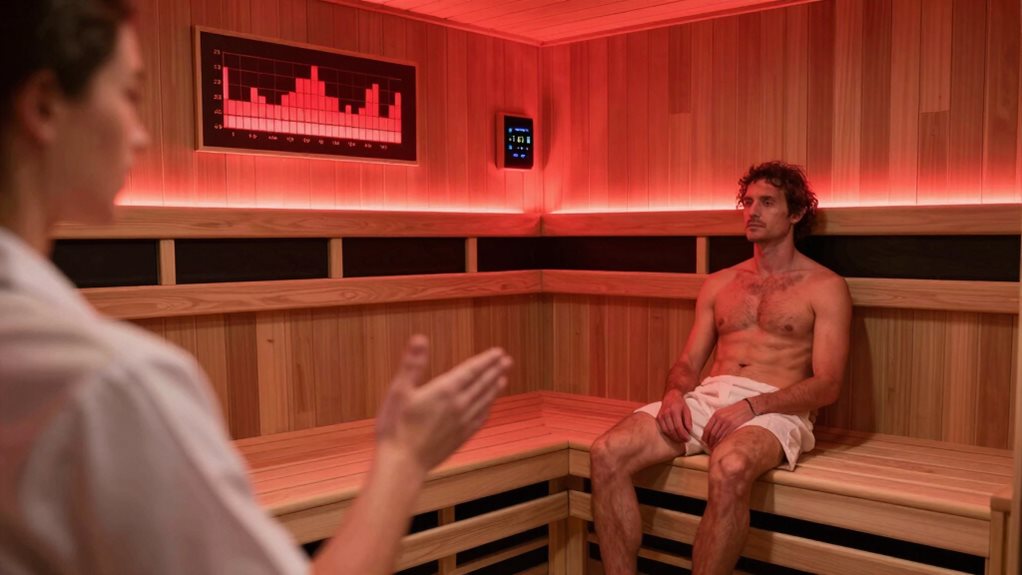
Before diving into sauna therapy, it’s crucial to take into account any safety concerns and potential contraindications to guarantee your experience is both enjoyable and beneficial.
Knowing when to skip that sauna session is key, and here are some important considerations:
Knowing when to skip the sauna is essential for safety and well-being.
- Avoid it if you have heart issues like congestive heart failure.
- Skip the sauna if you’re taking medications that may affect your heart or thermoregulation.
- If you’re pregnant or have diabetic neuropathy, consult your doctor first.
- Don’t use the sauna if you recently had a fever or injury.
- Always check in with your healthcare provider if you’re unsure.
Practical Device Considerations for Optimal Use
When you’re ready to plunge into sauna therapy, it’s vital to reflect on what devices you’ll use to guarantee you get the most out of your experience.
Look for dual-wavelength devices that combine 630–670 nm for skin benefits and 810–850 nm for deeper muscle penetration.
Check the manufacturer’s irradiance specs to confirm effectiveness at your intended distance—this verifies you’re not merely relying on numbers that sound good on paper.
Position your panels properly to avoid any barriers, as materials like glass can block light.
Finally, remember that a combination of infrared heaters and red/NIR panels can improve your sauna’s power, but make sure your electrical setup can handle the load.
Happy relaxing!
Regulatory Context and Device Classification
While you explore the domain of red light therapy devices, understanding their regulatory context and classification is essential.
These devices vary notably regarding safety and effectiveness, so here are some key points to remember:
Red light therapy devices differ significantly in safety and effectiveness, necessitating informed choices for optimal results.
- Class II Devices: Most red light therapy panels need FDA clearance, meaning they show considerable equivalence to existing devices.
- Class I Devices: Low-risk, over-the-counter options don’t require premarket review.
- Class III Devices: High-risk products need full FDA approval via a lengthy process.
- Marketing Claims: Cosmetic claims are okay, but medical claims need clearance.
- Clearance Process: Demonstrates safety and allows for clinical marketing.
Knowing these classifications helps guarantee you choose safe, effective devices for your needs.
Frequently Asked Questions
Can Red Light Therapy Help With Weight Loss?
Yes, red light therapy can help with weight loss. It may promote fat reduction and improve metabolism when combined with exercise and diet, although results might vary from person to person and require consistent effort.
How Long Does It Take to See Results?
You’ll likely see some results within the first few sessions, especially with relaxation and mood. More considerable improvements in skin texture and pain relief may take several weeks of consistent therapy for noticeable changes.
Is Red Light Therapy Safe for Children?
Red light therapy isn’t definitely safe for children. While some studies report no adverse effects, concerns about potential retinal damage exist. It’s wise to consult a healthcare professional before considering this therapy for kids.
Can I Use Red Light Therapy on Any Skin Type?
Yes, you can use red light therapy on any skin type. It’s generally safe and effective, with minimal risks for all Fitzpatrick skin types, especially for conditions like inflammation and acne. Just guarantee proper precautions.
What Should I Wear During Red Light Sauna Sessions?
During red light sauna sessions, wear minimal clothing like a towel or light swimsuit for ideal exposure. If you prefer coverage, choose breathable, light-colored, natural fabrics to allow better light penetration while maintaining comfort.
Final Thoughts
In summary, red light therapy in sauna use combines science and wellness to promote healing. By harnessing specific wavelengths, red and near-infrared light can penetrate your skin, supporting cell function and overall health. With encouraging clinical evidence and proper dosimetry, you can enjoy the benefits safely. So, as you relax in your sauna, remember it’s more than warmth; it’s a vibrant form of therapy bringing light to your well-being! Enjoy those beams of health!