
Choosing between traditional, infrared, and red light saunas depends on what you need. Traditional saunas heat the air and take longer to heat up, while infrared saunas use light and are quicker to warm up, helping with pain and detox. Red light saunas combine light therapy with sauna benefits. All offer unique wellness perks, but your choice also depends on factors like space and cost. Stick around, and you’ll discover more about each option!
Understanding the Mechanisms of Each Sauna Type
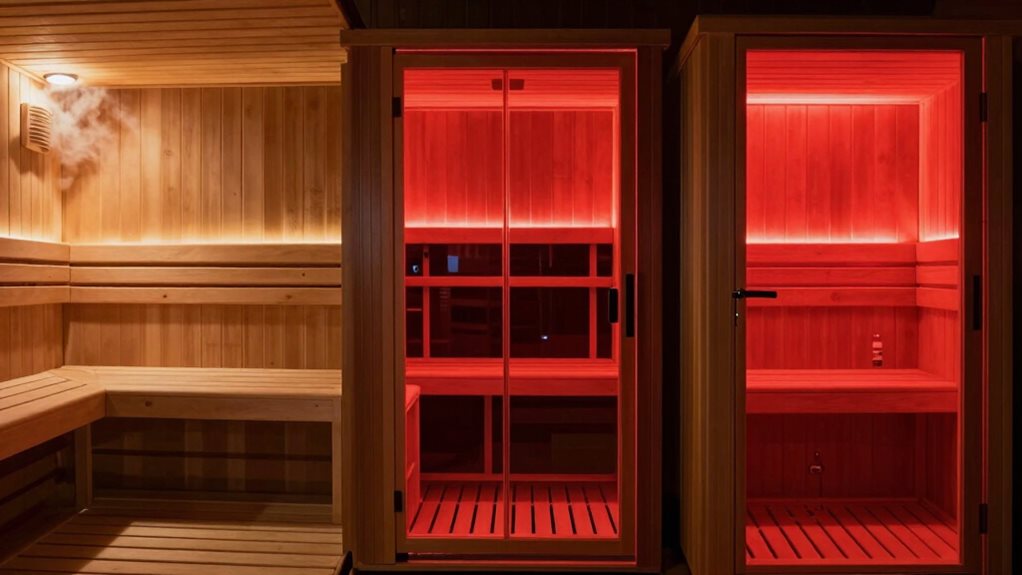
As you step into the world of saunas, it’s fascinating to discover how each type warms your body in a unique way.
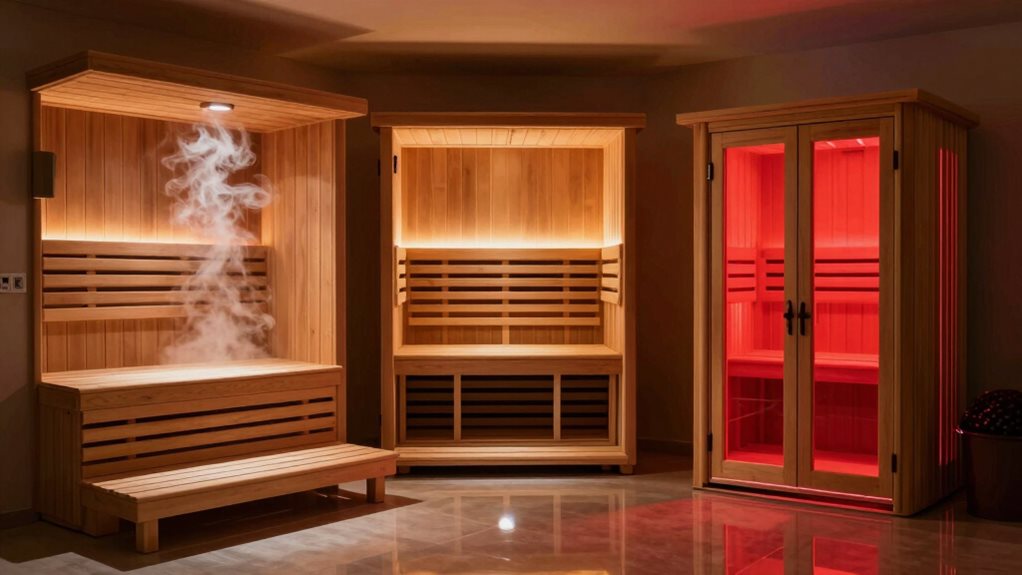
Traditional saunas heat the air around you using a stove and hot rocks, making you feel that warm hug as the hot air touches your skin.
Traditional saunas envelop you in warmth, as hot air from a stove and rocks gives you a comforting embrace.
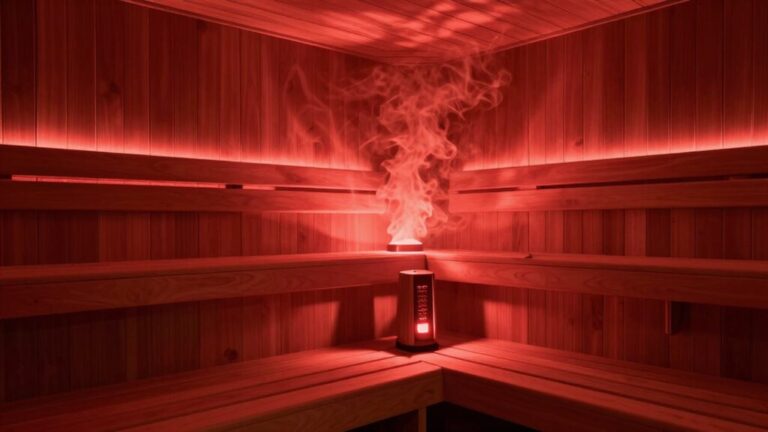
In contrast, infrared saunas use special light to penetrate deeper into your skin, directly warming your body without heating the air much at all. You mightn’t feel it, but near-infrared rays can even spark your cells to produce more energy.
Additionally, some saunas combine infrared light with red light therapy, giving your body both heat and a boost in cell activity.
Each sauna experience offers something special!
Session Parameters and Practical Considerations
When you’re planning a sauna session, understanding the session parameters and practical considerations can make your experience much more enjoyable. Here’s what you should keep in mind:
- Session Duration: Traditional saunas last 10-15 minutes, while infrared options offer 20-45 minutes of cozy warmth.
- Temperature Ranges: Expect 150-195°F in traditional saunas, compared to a gentler 110-140°F in infrared versions. Additionally, users who prefer intense heat may favor traditional saunas for their higher temperatures.
- Heat-Up Times: Traditional saunas need 30-45 minutes to heat up, while infrared ones are ready in just 10-20 minutes.
- Energy Costs: Standard saunas consume more energy, so infrared options save money with lower operating costs.
Choosing the right sauna type based on these factors guarantees a better, more comfortable experience customized to your needs!
Health Benefits: A Comparative Overview
Choosing between infrared and traditional saunas isn’t just about heat—it’s also about the health benefits each offers.
Infrared saunas can help lower blood pressure and improve heart function, much like a brisk walk does for your heart. Traditional saunas, on the other hand, are known to reduce the risk of heart disease and hypertension.
If you’re dealing with chronic pain like arthritis or muscle soreness, infrared heat can work wonders by reducing inflammation and speeding up muscle recovery.
Plus, both types promote detoxification and boost your immune system.
And don’t forget the mental health perks! Whether you choose infrared for relaxation or traditional for longevity, both saunas can help you feel better in multiple ways.
Safety and Contraindications
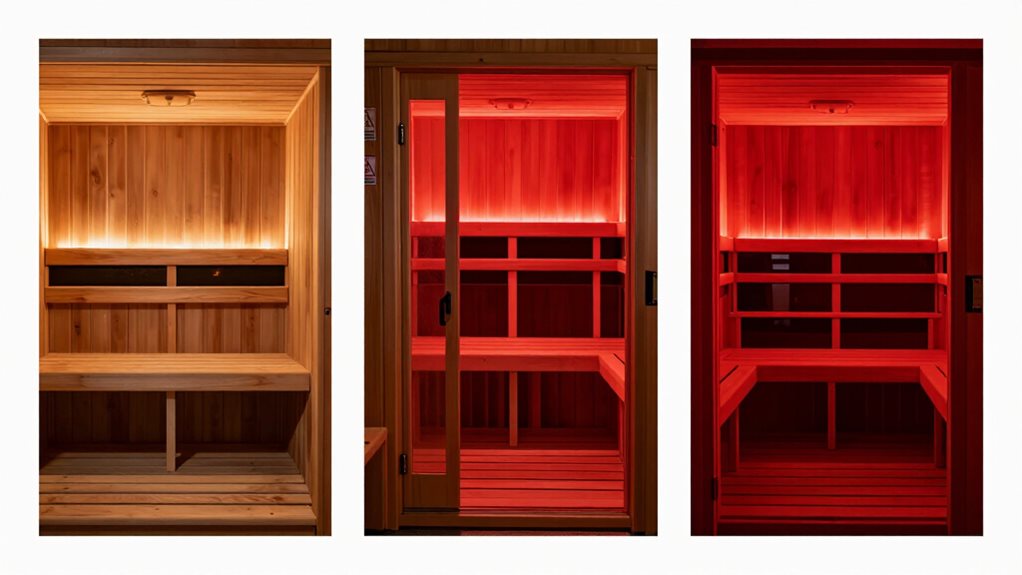
Staying safe while enjoying a sauna should be a top priority for everyone, especially since different types of saunas come with their own set of precautions.
Prioritizing safety is essential in the sauna, as each type requires unique precautions.
Here are some important safety tips to keep in mind:
- Avoid traditional saunas if you have severe heart disease or uncontrolled high blood pressure.
- For infrared saunas, it’s best to consult a doctor before using them during pregnancy or if you have circulatory issues.
- Drink plenty of water before and after your session to prevent dehydration.
- Keep track of your time in the sauna to avoid overheating.
Always listen to your body. If you feel dizzy or unwell, it’s time to exit.
Enjoy your sauna experience, but make safety your top priority!
Cost, Space, and Convenience Factors
Deciding on the right sauna for your home goes beyond just personal preference; it involves considering cost, space, and convenience.
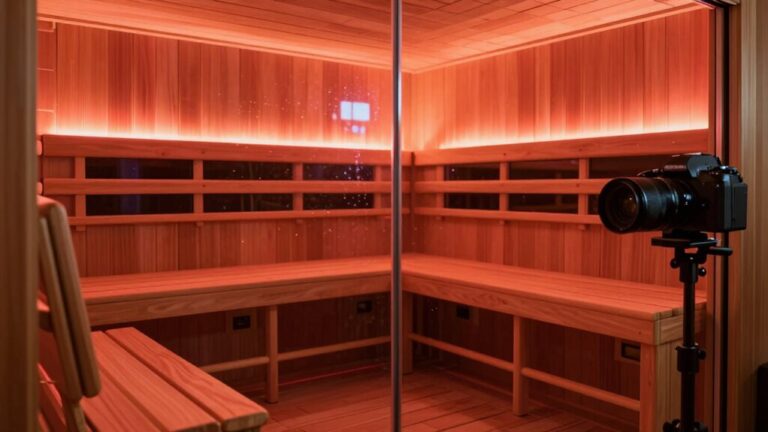
For example, infrared saunas often fit snugly into tight spaces, with many one-to-two-person units measuring just 4′ x 4′. Traditional saunas, however, need more room for benches and heaters.
When it comes to wiring, infrared models typically plug into regular outlets, making them easier to install, while traditional saunas might require special circuits or even permits.
Upfront, red-light panels can be a cost-effective choice, usually priced in the hundreds, compared to traditional builds that can get pricey.
Frequently Asked Questions
Can I Use All Three Types of Saunas in One Session?
You can’t safely use all three types of saunas in one session. They operate differently and may cause cardiovascular strain. It’s better to use them separately, allowing breaks to monitor your body’s response.
How Often Should I Use Each Type of Sauna for Best Results?
You should aim for 3-7 sessions per week for best results, spending 15-20 minutes each time. Start with 1 session weekly, then build up to 4-7 for maximum health benefits. Stay hydrated!
Are There Specific Brands Recommended for Home Sauna Use?
For home sauna use, you should consider brands like Sun Home for full-spectrum options, Tylo for traditional designs, or Northern Lights for stylish cabins. Each offers unique benefits customized to your needs and preferences.
What Additional Health Practices Complement Sauna Use?
To complement sauna use, hydrate properly, replace lost electrolytes, exercise regularly, incorporate stretching, and consider contrast therapy. Monitor your heart rate and recovery to maximize benefits while minimizing risks during sessions.
Do Saunas Interact With Medications or Supplements?
Yes, saunas can interact with medications and supplements. Certain drugs, like diuretics and SSRIs, may increase dehydration risks or impede thermoregulation, so you should consult a healthcare professional before using a sauna with these medications.
Final Thoughts
In the end, choosing the best sauna for you really depends on what you’re looking for. Traditional saunas offer a classic experience, while infrared and red light saunas can provide deeper heat and unique health benefits. Consider your preferences, health needs, and space available. Whether you want to relax, detox, or improve your wellness, there’s a sauna style that fits your lifestyle. So, grab a towel and plunge into your sauna adventure—your body will thank you!