
Neither steam rooms nor saunas are universally “better”—they offer different benefits. Saunas (150-195°F, dry heat) excel at cardiovascular health and muscle recovery, while steam rooms (110-120°F, high humidity) are ideal for respiratory relief and skin hydration. Your choice should match your wellness goals: pick saunas for heart health and detoxification or steam rooms for congestion and moisturized skin. Both require proper hydration and time limits for safety. The right choice depends entirely on your specific health needs.
Understanding the Fundamental Differences Between Saunas and Steam Rooms
While both saunas and steam rooms offer therapeutic heat experiences, they differ dramatically in their fundamental characteristics.
You’ll notice the temperature distinction immediately—saunas reach 150-195°F, while steam rooms maintain a lower 110-120°F range. The humidity creates another stark contrast: saunas keep a dry environment with just 5-30% humidity, while steam rooms surround you with tropical-like conditions at 95-100% moisture.
This humidity difference significantly impacts how your body sweats, as saunas promote sweat evaporation while steam rooms prevent it due to the saturated air.
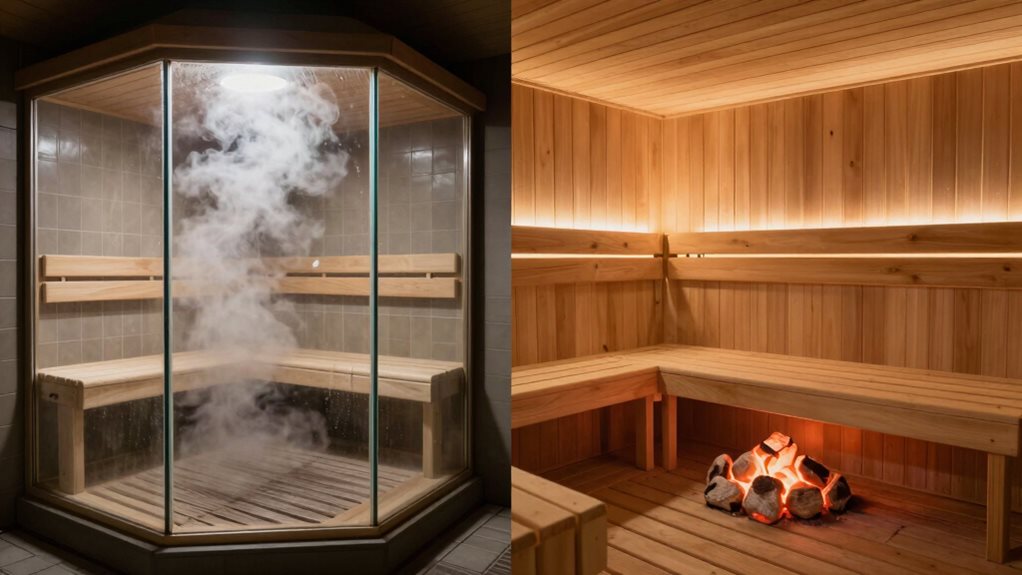
Their construction reflects these differences too. Saunas feature wooden interiors using materials like cedar or pine that handle dry heat well, with built-in ventilation to maintain low humidity.
Steam rooms, however, utilize non-porous surfaces like tile and glass that prevent moisture damage, with airtight construction to trap humidity. The heat sources also vary—saunas use hot rocks, while steam rooms rely on generators that boil water. These distinctive environments create entirely different wellness experiences, with steam rooms excelling at respiratory relief while saunas deliver more intense cardiovascular stimulation.
Health Benefits: How Each Environment Affects Your Body Differently
When you step into either a sauna or steam room, you’re doing more than just relaxing—you’re engaging in a therapeutic experience with distinct health benefits.
Saunas offer impressive cardiovascular perks, potentially reducing your risk of heart problems through regular use. The dry heat raises your heart rate similar to light exercise, improving circulation and endothelial function over time. Saunas can effectively help flush cholesterol from your system through increased sweating.
Regular sauna sessions create heart-healthy benefits by gently elevating heart rate and enhancing blood vessel function.
For your muscles, saunas penetrate deeply to relieve stiffness and may help with post-exercise recovery. The heat therapy can increase flexibility and mobility, serving as an excellent warm-up option before workouts.
Steam rooms, with their high humidity, excel at respiratory benefits. They’re particularly effective for clearing congestion, loosening mucus, and hydrating your airways.
The moist heat can provide notable relief if you’re struggling with sinusitis or nasal congestion. Your muscles also benefit from steam’s ability to increase blood flow and reduce soreness.
Making the Right Choice Based on Your Wellness Goals
How do you decide between stepping into a sauna’s dry heat or welcoming a steam room’s humid hold? Your health objectives should guide this choice, as each environment offers distinct benefits.
Consider your primary wellness goals:
- Cardiovascular health – Choose saunas for stronger cardiovascular responses, reduced blood pressure, and improved arterial stiffness (with medical clearance if you have heart concerns).
- Respiratory relief – Opt for steam rooms when you need to loosen mucus and ease congestion, as the humid air hydrates airways more effectively than dry sauna heat.
- Skin benefits – Select steam rooms for hydration and improved skin pliability, or saunas for deep sweating that promotes pore clearing and exfoliation. Research shows regular sauna use is associated with lower disease risk for various cardiometabolic conditions.
The typical temperature differences are significant, with saunas operating at 150°F to 195°F while steam rooms maintain lower temperatures between 114°F and 120°F.
Remember to rehydrate after either experience to restore your body’s balance.
Scientific Research on Heat Therapy’s Impact on Longevity
The compelling evidence linking regular heat therapy to increased longevity has emerged primarily from extensive Finnish research. Studies following middle-aged men for over 20 years found that those using saunas 4-7 times weekly experienced 40% lower all-cause mortality compared to once-weekly users.
This remarkable benefit extends to cardiovascular health, with frequent sauna bathers enjoying a 50% reduction in cardiovascular-related deaths. Even limited sauna use offers protection, as men using saunas just once weekly showed a 24% reduction in mortality risk compared to non-users.
The benefits appear dose-dependent—longer sessions (more than 19 minutes) reduced sudden cardiac death risk by 52% compared to shorter sessions.
Heat therapy works through multiple mechanisms, including reducing inflammation throughout your body, boosting heat shock proteins associated with longer lifespans, and improving cardiovascular function. The mild heat stress experienced during sauna sessions triggers hormetic responses that enhance the body’s resilience to various stressors.
These effects complement regular exercise, potentially helping you maintain muscle mass and physical fitness as you age.
Safety Precautions and Best Practices for Maximum Benefits
Maximizing the therapeutic potential of heat therapy requires adherence to essential safety practices and protocols. Proper preparation sets the foundation for a beneficial experience – shower first to remove oils, wear light clothing, and hydrate well before entering.
Once inside, monitor your body’s signals carefully. This is especially important in saunas where the dry heat environment creates more intense temperature conditions than steam rooms.
For ideal results and safety, follow these key guidelines:
- Start with shorter sessions (5-10 minutes for steam rooms, 8-10 minutes for saunas) and gradually increase as your body adapts.
- Drink water before, during if needed, and consume 2-4 glasses after to replace lost fluids.
- Exit immediately if you feel dizzy, nauseated, or overheated, then rest 5-10 minutes at room temperature.
Remember that certain medical conditions like high blood pressure, pregnancy, or illness are contraindications for heat therapy. Avoid alcohol consumption before sessions as it significantly increases the risk of dehydration and can lead to dangerous overheating.
Frequently Asked Questions
Can Saunas or Steam Rooms Help With Weight Loss?
Neither saunas nor steam rooms cause considerable fat loss. You’ll temporarily lose water weight through sweating, but it returns with rehydration. They’re best used to complement your exercise routine, not replace it.
How Soon After Eating Should I Wait Before Using Either?
Wait 1-2 hours after eating before using either. For saunas, allow 90 minutes due to intense dry heat. Steam rooms require at least 60 minutes post-meal. Light snacks need only 30-60 minutes wait time.
Are Infrared Saunas More Beneficial Than Traditional Dry Saunas?
Research doesn’t clearly show infrared saunas are more beneficial than traditional ones. You’ll get similar cardiovascular benefits from both, though infrared may be more comfortable at lower temperatures if you’re heat-sensitive.
Can Children Safely Use Saunas or Steam Rooms?
Children can use saunas safely with strict supervision. You’ll need to limit their time (5-10 minutes), monitor for overheating signs, guarantee proper hydration, and follow age-appropriate guidelines. Kids under 6 generally shouldn’t use them.
How Do Medications Interact With Sauna or Steam Room Use?
Many medications interact dangerously with heat exposure. You’ll need to be cautious with diuretics, beta blockers, blood pressure meds, and transdermal patches. They can affect your body’s heat regulation and medication absorption. Always consult your doctor first.
Final Thoughts
Whether you choose a sauna or steam room depends on your specific health goals. Saunas offer dry heat that may boost heart health and longevity, while steam rooms provide moist heat that’s excellent for respiratory issues. You’ll get the most benefit by using them correctly—staying hydrated, limiting sessions to 15-20 minutes, and listening to your body. Both options offer valuable wellness benefits when incorporated thoughtfully into your health routine.