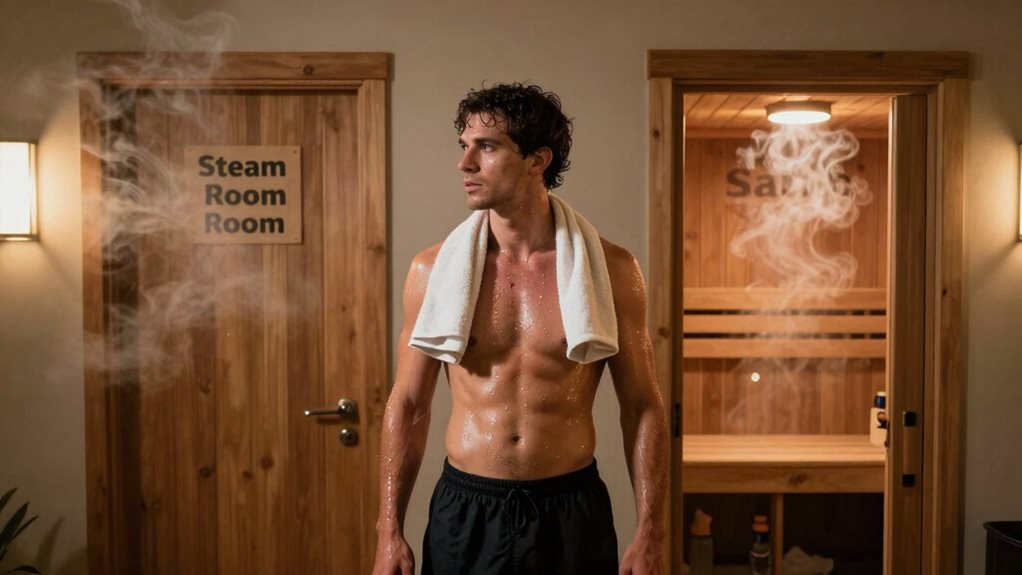

Both steam rooms and saunas offer valuable post-workout benefits, but your choice depends on your goals. Steam rooms (110-120°F, high humidity) excel at opening airways and loosening phlegm, making them ideal after cardio. Saunas (150-195°F, dry heat) promote deeper sweating and muscle recovery through improved circulation and heat shock protein activation. For maximum benefits, limit steam room sessions to 5-15 minutes and sauna sessions to 10-20 minutes. The specific details about each option might surprise you.
Steam Room vs. Sauna: Understanding the Core Differences
While both steam rooms and saunas offer relaxing post-workout experiences, they differ greatly in their fundamental characteristics.
The most obvious contrast is temperature and humidity. Saunas blast you with intense dry heat (150-195°F) with just 5-30% humidity, while steam rooms maintain a lower temperature range (110-120°F) but nearly saturate the air at 95-100% humidity.
You’ll notice the construction differences too. Saunas use porous woods like cedar with built-in ventilation, allowing your sweat to evaporate quickly. This design promotes thermal energy transfer through radiation and conduction from the heated surfaces.
Steam rooms feature non-porous materials like tile and glass in airtight designs, where moisture condenses on your skin. This distinction affects how your body responds—saunas typically raise your heart rate to about 126 BPM, while steam rooms push it higher to around 138 BPM. The heat technologies also differ fundamentally, as saunas rely on hot rocks that gradually release warmth, while steam rooms generate humidity through dedicated steam generators.
Muscle Recovery Benefits: How Heat Therapy Reduces DOMS
After your workout, heat therapy kicks your body’s recovery into high gear by activating heat shock proteins that repair damaged muscle fibers and reduce inflammation.
You’ll notice improved range of motion as the heat relaxes tight muscles, making everyday movements less painful during the typical 24-48 hour DOMS window.
The improved circulation from both steam rooms and saunas delivers more oxygen and nutrients to your sore muscles while removing metabolic waste, speeding up your recovery process so you can get back to training sooner. Research indicates that heat therapy at 45 °C temperature can significantly improve tissue perfusion and muscle elasticity, supporting more effective muscle regeneration compared to cold therapy alone. Studies show that heat application is superior for strength recovery immediately following exercise, helping maintain performance for your next workout session.
Heat Shock Proteins Activate
When your muscles feel sore after an intense workout, heat therapy triggers a remarkable internal repair process through heat shock proteins (HSPs). These protective proteins activate when your body temperature rises in saunas or steam rooms.
Here’s how it works: normally, HSP72 (a key heat shock protein) is attached to HSF1. When you experience heat stress, they separate. HSF1 then travels to your cell’s nucleus and starts producing more HSPs.
These proteins find damaged muscle fibers, help refold distorted proteins, and remove severely damaged ones. Research shows that post-workout sauna sessions can trigger a 16-fold increase in growth hormone levels by the third day of treatment. Regular heat exposure can help counteract the age-related decline in HSP70 expression that contributes to decreased muscle regenerative capacity.
Your body’s HSP response is particularly strong in fast-twitch muscle fibers, which are often most affected by intense workouts.
Improved Range of Motion
Your ability to move freely after an intense workout depends greatly on how you treat your muscles during recovery.
When you apply heat to your body post-exercise, you’re helping your muscles regain their natural elasticity faster. Studies show that heat therapy greatly improves muscle elasticity compared to cold treatments, with heat-treated muscles returning more effectively to their resting state.
This improved elasticity translates directly to better range of motion. The warmth relaxes muscle tone and reduces stiffness, allowing you to move more comfortably. Research indicates that moist heat application provides greater pain reduction than dry heat methods, especially when used immediately after exercise. Regular heat therapy sessions can significantly reduce the risk of adverse events during your recovery process.
For best results, apply heat immediately after exercising, when your muscles are most receptive to the benefits. The science is clear: heat penetrates deep into tissue, increasing blood flow up to four times normal levels when temperatures reach 42-44.5°C, which helps your joints and muscles move more freely.
Enhanced Circulation Effects
Heat therapy’s impact on circulation represents one of the most powerful ways to accelerate muscle recovery after intense exercise.
When you step into a steam room or sauna after your workout, your blood vessels dilate, dramatically increasing blood flow throughout your body.
This boosted circulation delivers oxygen and nutrients directly to your tired muscles while simultaneously flushing away lactic acid and other waste products that cause soreness.
Steam rooms, with their moist heat, are particularly effective at penetrating deeper into soft tissues, loosening tight muscle fibers faster. Research indicates steam rooms increase blood flow by 17% more than dry heat environments, maximizing their muscle recovery benefits.
Meanwhile, saunas shift blood from your core to peripheral muscles, helping repair exercise-induced damage. Both heat therapy options promote endorphin release, creating a natural pain-relieving effect that enhances your recovery experience.
Studies show this enhanced circulation directly correlates with reduced DOMS symptoms, as your muscles receive everything they need to rebuild and recover more efficiently than they’d without heat therapy.
Respiratory System Effects: Clearing Airways Post-Exercise
After pushing through an intense workout, your respiratory system often needs recovery just as much as your muscles do.
Both steam rooms and saunas offer benefits for clearing congested airways, but they work differently.
Steam rooms excel at opening your airways through heat and humidity. The moist environment loosens mucus, making it easier to expel phlegm and clear nasal passages irritated during exercise.
You’ll find steam particularly helpful during allergy season or when dealing with workout-induced congestion.
Saunas, while less humid, still promote respiratory recovery by expanding your plasma volume and improving cardiorespiratory fitness.
For best results, try a steam session first to clear mucus, followed by a sauna visit to boost long-term respiratory function.
This combination can greatly reduce your recovery time and help you return to peak performance faster.
Skin Health and Hydration Impact After Intense Workouts
After an intense workout, your skin faces the challenge of recovering from sweat, dirt, and oil buildup.
Steam rooms offer superior post-workout skin rehydration, surrounding you with 100% humidity that replenishes moisture while opening pores to flush away exercise debris.
Your skin will thank you for choosing steam over a sauna’s dry heat, as the moist environment helps maintain elasticity and prevents the dehydration that can occur when you’ve already lost fluids through exercise.
Post-Workout Skin Rehydration
While you’re pushing through that last set of squats or final mile on the treadmill, your skin is undergoing notable changes that demand attention once you finish. You’re losing between 0.5 to 2 liters of fluid per hour through sweat, which doesn’t just affect your muscles—it impacts your skin too.
Your post-workout recovery routine should start within 30 minutes of exercise. First, shower with a gentle cleanser to remove sweat, salt, and bacteria that can disrupt your skin barrier.
Pat your skin dry rather than rubbing vigorously, which helps preserve moisture. Then, apply products containing hyaluronic acid or ceramides to lock in hydration.
Don’t forget to drink plenty of water—aim for about 150% of the fluid you lost to fully restore your body’s hydration levels.
Pore Cleansing Benefits
When intense workouts leave your skin flushed and sweaty, what happens to your pores becomes crucial for your skin’s health.
Both steam rooms and saunas offer notable pore-cleansing benefits, but they work differently.
In the steam room, the 100% humidity opens your pores effectively while keeping your skin hydrated. The moist heat softens pores, improving elasticity as warm condensation rinses away dirt and dead skin cells.
This combination helps prevent breakouts and promotes clearer skin.
Saunas, with their dry heat (150-190°F), trigger deep sweating that flushes impurities from your pores. This process boosts circulation and sloughs off dry skin cells, improving collagen production.
However, saunas can temporarily dehydrate your skin, potentially tightening pores if you stay too long.
Cardiovascular Response to Heat Exposure Following Training
Your body undergoes considerable cardiovascular adjustments during heat exposure following a workout, whether you’ve chosen a steam room or sauna.
Your heart rate, which is already raised from exercise, typically increases another 15-40 beats per minute as your body works to cool itself. This happens because your blood vessels near the skin dilate, redirecting blood flow to your skin’s surface.
This redistribution creates a competition between cooling your body and supplying your recovering muscles with blood. Your heart must work harder, increasing cardiac output to maintain blood pressure.
While this creates temporary strain, regular heat exposure can actually improve your cardiovascular function over time. Within just 4-5 days of heat acclimatization, you’ll notice lower heart rates and improved heat tolerance during subsequent exposures.
Hormonal Optimization for Performance and Recovery
Your post-workout heat therapy considerably impacts your hormonal environment, with both saunas and steam rooms offering unique benefits.
Saunas can elevate your growth hormone levels by up to 142% after just two 15-minute sessions at 80°C, supporting muscle repair, protein synthesis, and recovery.
While both heat therapies help lower stress hormones like cortisol, they simultaneously trigger the release of feel-good endorphins that improve your mood and accelerate recovery.
Growth Hormone Benefits
Harnessing the power of heat releases a remarkable hormonal response in your body after workouts.
Sauna sessions trigger your pituitary gland to boost growth hormone production by 142-500%, peaking 2-3 hours post-session and remaining heightened for up to 8 hours.
This natural hormone surge works wonders for your recovery and performance.
- A single 20-minute sauna session can increase your growth hormone by up to 500%
- Your body repairs muscle tissue faster when growth hormone levels are heightened
- Using the sauna within 30 minutes after exercise maximizes these benefits
- Combining resistance training with sauna use amplifies growth hormone 300% over exercise alone
- These temporary spikes help with fat metabolism and tissue repair, similar to effects of intense training
Stress Hormone Regulation
How effectively your body manages stress can dramatically influence your post-workout recovery and long-term fitness gains. Both steam rooms and saunas help regulate your stress hormones, particularly cortisol, but through slightly different mechanisms.
While a single sauna session initially raises cortisol, regular use actually reduces your overall cortisol levels over time.
Steam rooms, especially when used within 30 minutes after exercise, can immediately lower this stress hormone. Both environments trigger your body to release mood-boosting endorphins (similar to a “runner’s high”) and activate your parasympathetic nervous system—your body’s relaxation response.
For ideal stress regulation, consider using either option about four times weekly for 20-minute sessions. This consistent practice helps balance your hormonal system, improves sleep quality, and boosts your body’s ability to recover from workouts.
Detoxification Processes Through Different Heat Therapies
While both steam rooms and saunas promote detoxification, they accomplish this goal through distinctly different mechanisms and environments.
Saunas use intense dry heat (150°F-195°F) to trigger deep sweating that flushes out toxins like heavy metals and metabolic waste, while steam rooms operate at lower temperatures (110°F-120°F) with 100% humidity for gentler surface-level detox.
Sauna’s dry intensity extracts deep toxins; steam’s gentle moisture cleanses from the surface.
- Sauna sessions produce more sweat volume, making them more effective for deep cellular detoxification.
- Steam rooms excel at opening pores and softening skin cells, helping remove environmental impurities.
- Both therapies improve blood circulation, which helps transport toxins out of your body.
- Saunas may better eliminate workout metabolites, alcohol, and nicotine from your system.
Your choice depends on goals: intense detox (sauna) vs. gentle skin cleansing (steam room).
Timing Your Heat Therapy for Maximum Recovery Benefits
When you step into a sauna or steam room after your workout can greatly impact how much your body benefits from the heat therapy. For best results, always take a 5-15 minute active cooldown before entering any heat facility. This allows your heart rate and blood pressure to decrease, making the heat experience safer and more effective.
Most people benefit from sessions lasting 10-20 minutes, though your personal tolerance may vary. Consider shorter, repeated sessions with cooling breaks in between to maximize benefits while minimizing risks.
If you’re specifically targeting muscle relaxation, a steam room’s moist heat works wonders for tight muscles. For systemic recovery benefits like heat-shock proteins, dry saunas tend to produce stronger responses.
Always hydrate well before entering any heat therapy space.
Personalized Approaches Based on Workout Type and Goals
Your body’s needs differ dramatically depending on your workout style and fitness goals. Choosing between steam room and sauna isn’t one-size-fits-all—it’s about matching the heat therapy to what your body craves after specific exercises.
- After strength training, opt for dry saunas to boost heat shock proteins and growth hormone, boosting muscle repair.
- For endurance workouts, saunas increase cardiac output and mimic aerobic load, improving cardiovascular adaptation.
- HIIT enthusiasts benefit from steam rooms’ moist heat to reduce inflammation and ease breathing recovery.
- If you’re congested or have respiratory concerns, steam’s humidity clears sinuses and opens airways.
- Prioritizing skin health? Steam rooms maintain 100% humidity, hydrating skin while saunas cause deeper sweating for toxin elimination.
Listen to your body’s signals and align your post-workout heat therapy with your primary fitness objectives.
Best Practices for Safe and Effective Heat Recovery Sessions
Maximizing the benefits of heat therapy after workouts depends entirely on how you approach your steam room or sauna sessions. Proper preparation starts with drinking 16-32 ounces of water beforehand to maintain hydration, as you’ll lose considerable fluid through sweating.
Always cool down for 5-10 minutes post-workout before entering any heat environment. For ideal results, limit your steam room sessions to 5-15 minutes at 100-120°F, while sauna sessions can last 10-20 minutes at 150-190°F.
Don’t push yourself—exit immediately if you feel dizzy or uncomfortable. After your session, rehydrate with 16-24 ounces of water, take a lukewarm shower, and stretch to improve flexibility gains.
Remember to consume a protein-rich snack within 30 minutes to support muscle repair.
Frequently Asked Questions
Can Heat Therapy Improve Sleep Quality After Evening Workouts?
Yes, evening heat therapy can improve your sleep quality after workouts. When timed 1-2 hours before bed, it triggers a cooling effect that promotes faster sleep onset and deeper slow-wave sleep.
How Does Heat Therapy Affect Athletic Performance the Following Day?
You’ll likely perform better the next day after heat therapy because it speeds up glycogen restoration, improves blood flow, accelerates muscle recovery, and extends exercise adaptations. These effects allow for higher training intensity and volume.
Are Saunas or Steam Rooms Better for Joint Pain Relief?
Steam rooms are generally better for joint pain relief. You’ll benefit from the higher humidity that hydrates tissues, improving elasticity and reducing stiffness. The moist heat provides greater pain reduction than dry saunas.
Should Diabetic Athletes Modify Their Heat Therapy Routines?
Yes, you should modify heat therapy routines. Avoid heat 1-4 hours after insulin injection, check blood glucose frequently, stay hydrated, and limit session duration to prevent hypoglycemia or hyperglycemia risks specific to your diabetes type.
Can Heat Exposure Increase Protein Synthesis for Muscle Building?
Yes, heat exposure can increase protein synthesis for muscle building. You’ll benefit from increased HSP activation, augmented mTOR signaling, and improved nutrient delivery, though results are more notable when combined with resistance training.
Final Thoughts
You’ll benefit from either a sauna or steam room after working out, but your choice depends on your specific needs. Steam rooms offer better respiratory relief and skin hydration, while saunas typically provide deeper muscle relaxation. Listen to your body, start with short 5-10 minute sessions, and always hydrate before and after. Whether you prefer dry or moist heat, incorporating these therapies into your routine can greatly improve your post-workout recovery.